A Case Study
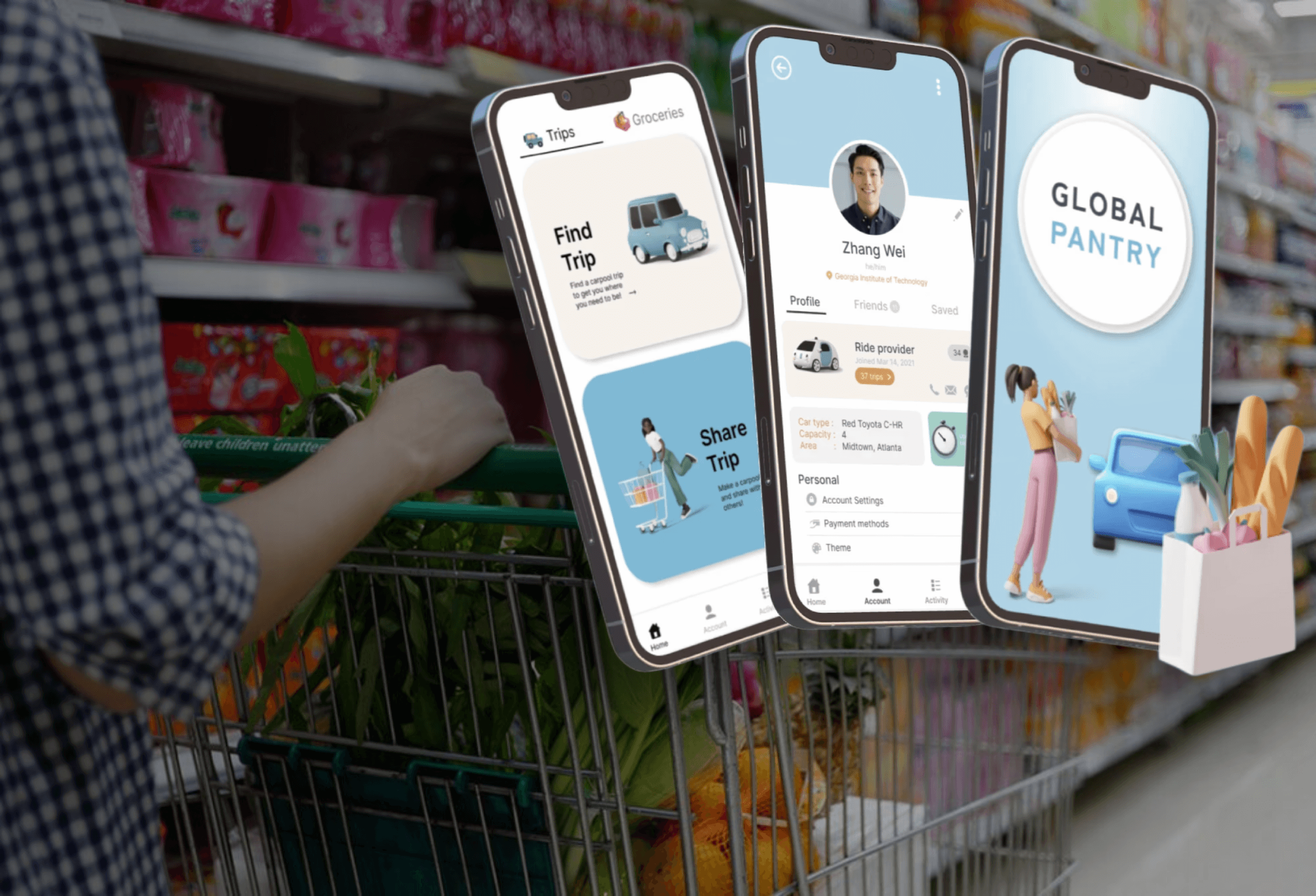
GLOBAL PANTRY
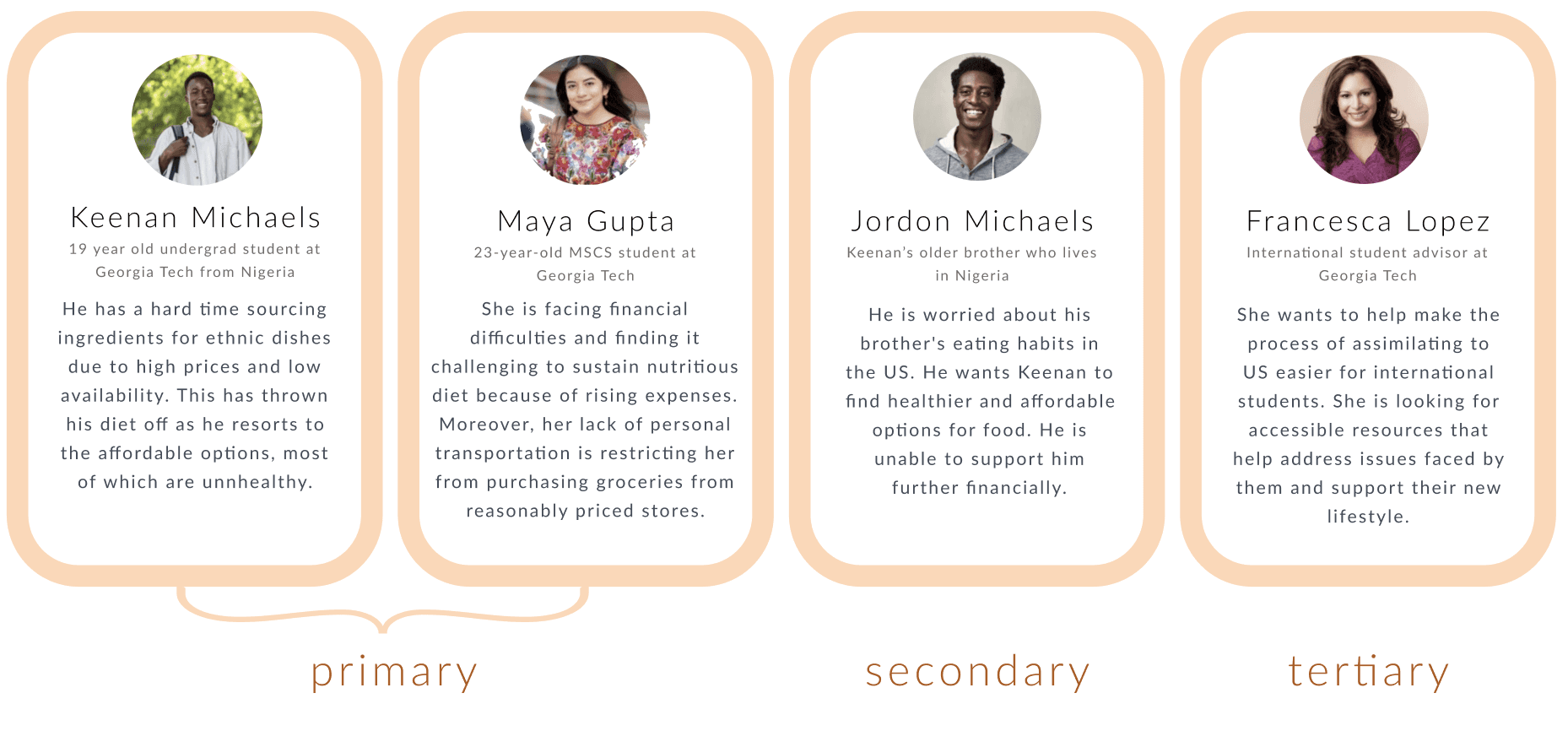
The need for a one-stop solution for international students' ethnic groceries and food needs: The influx of international students to the United States has steadily increased over the past decade. These students face a myriad of issues when settling into the country. This project focuses on the major qualms of international students and a way to address some of them. Y
View Prototype
Objective
Identify primary issues faced by international students and prototype a solution.
Outcome
Designed a one-stop solution for international students' ethnic groceries and food needs.
TIME PERIOD
Aug-Dec 2023
Scope of work
User Research
Affinity Mapping
Storyboarding
Prototyping
PROJECT GOALS

Identify problems faced by international students in the US

Propose a comprehensive solution to tackle these issues

Design a prototype for the solution
User Study: Asking International Students
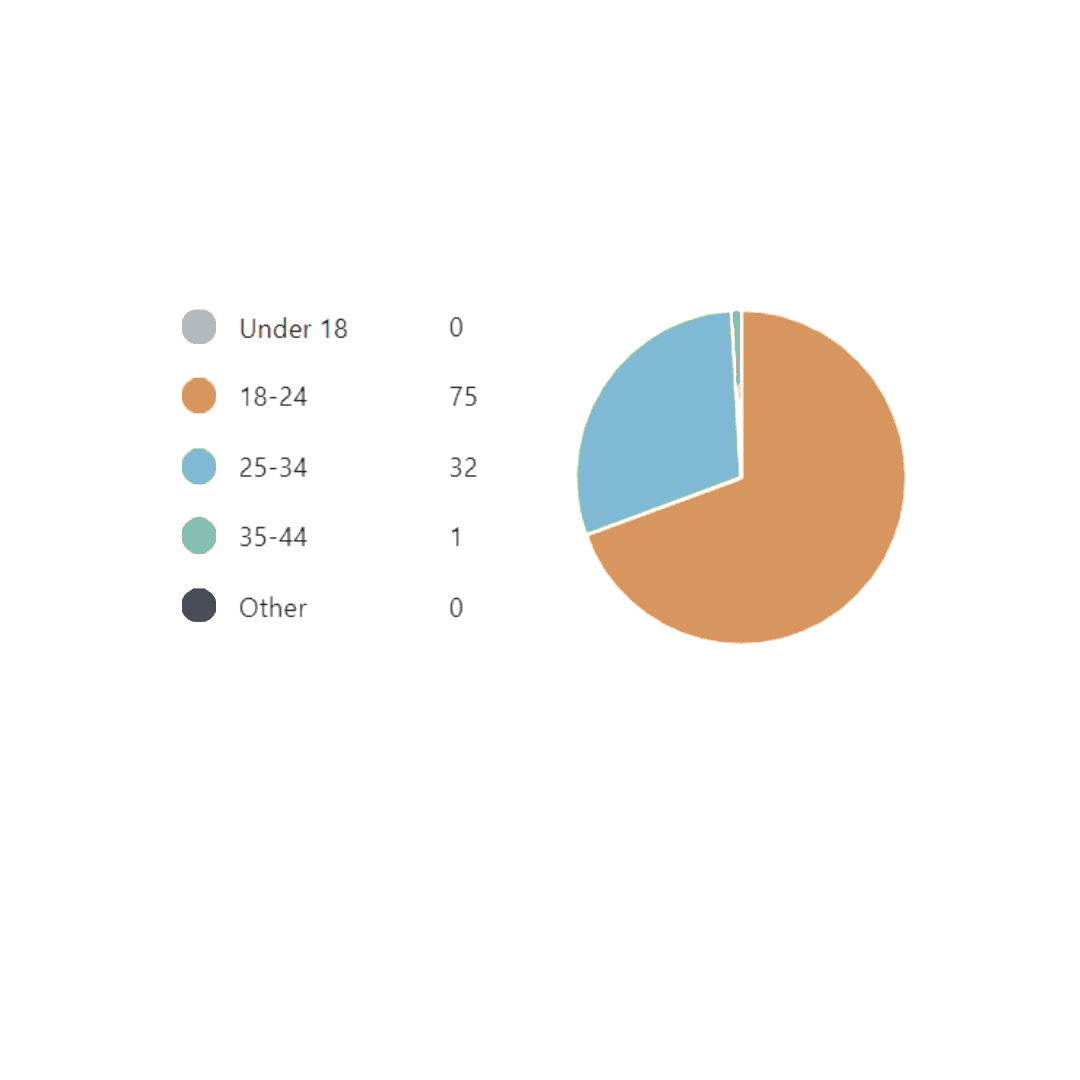
We sent out a survey for international students to collect demographic information and had Likert scales for issues related to accommodation, transport, food, time management, social life etc. We then followed this up with 8 interviews on participants recruited by the team members. They were all international students (both master’s and PhD) who have been in the US for less than a year.
We asked them about their background, experiences, and challenges faced after moving to a new country.
Responder demographics

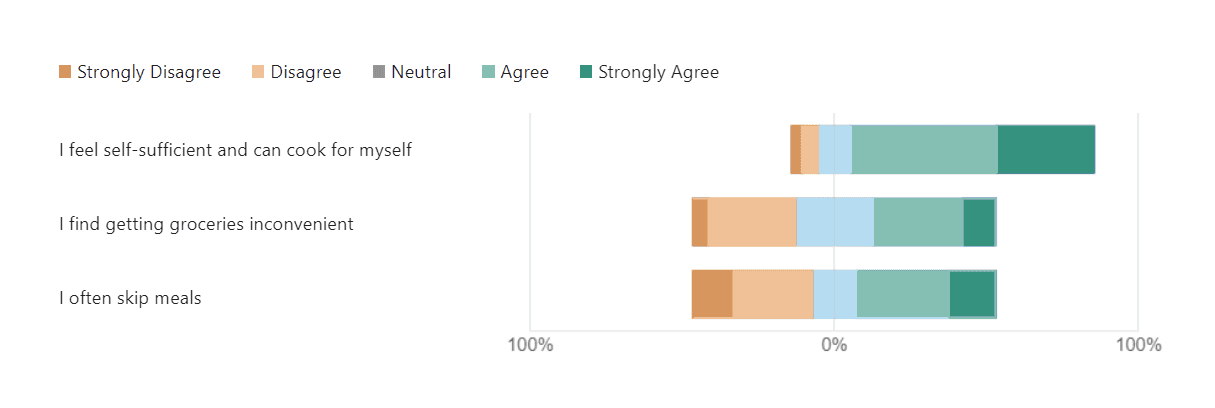
Interview Insights
After collecting and analysing the survey and interview data, we had enough data to draw out an affinity map. We categorized the main pain points described by participants and found that a majority of the issues were food related.
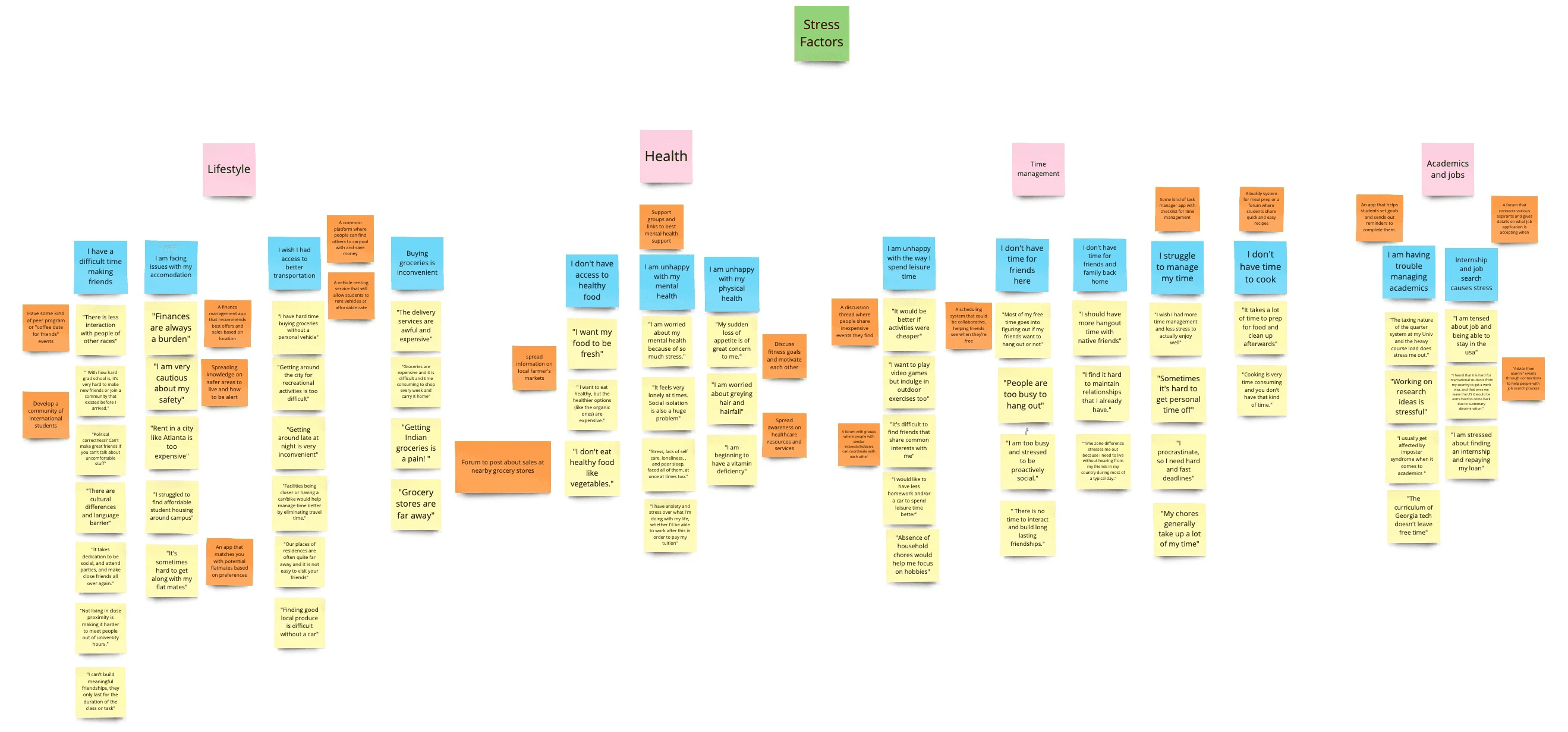
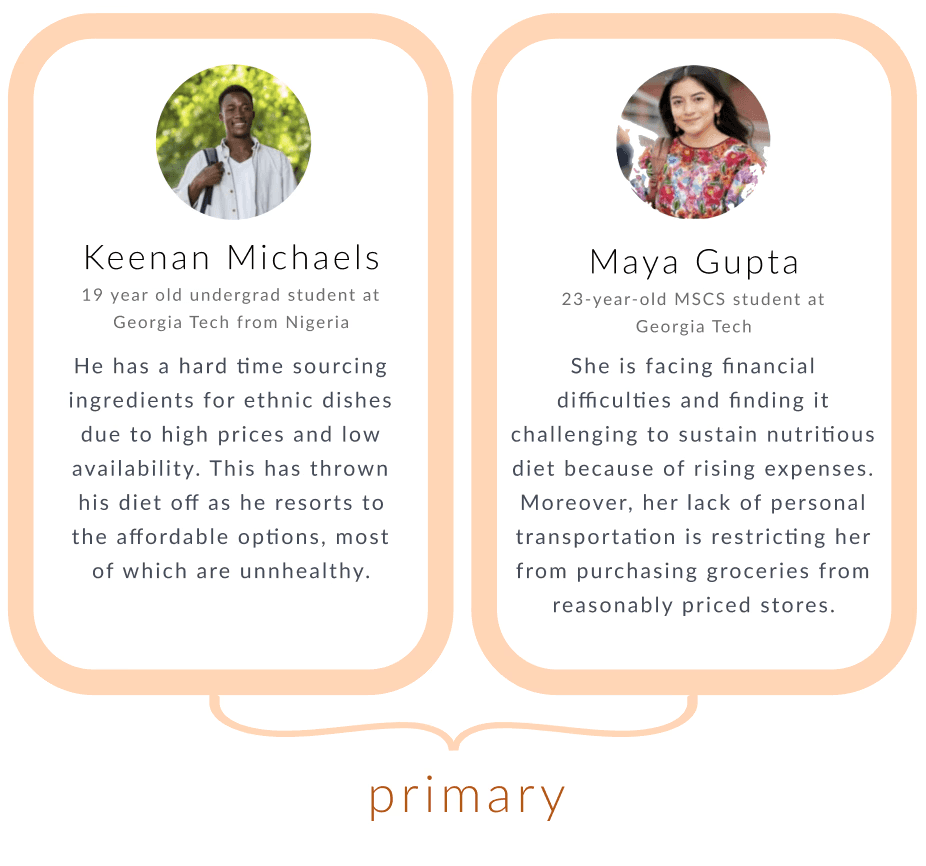
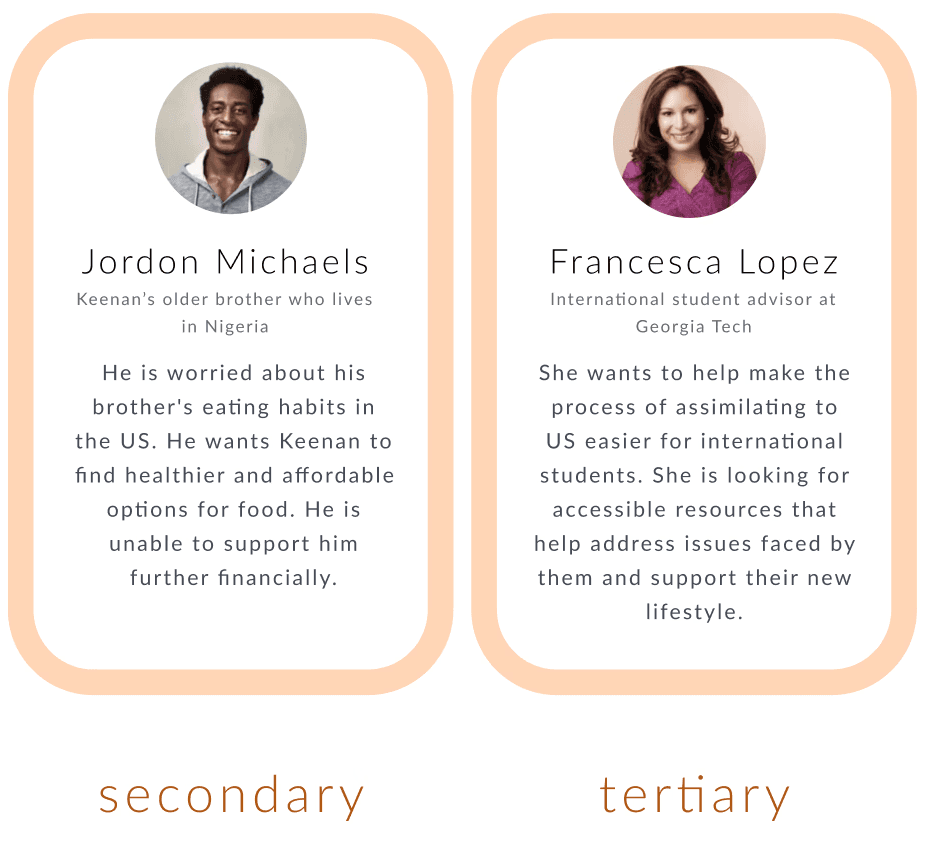
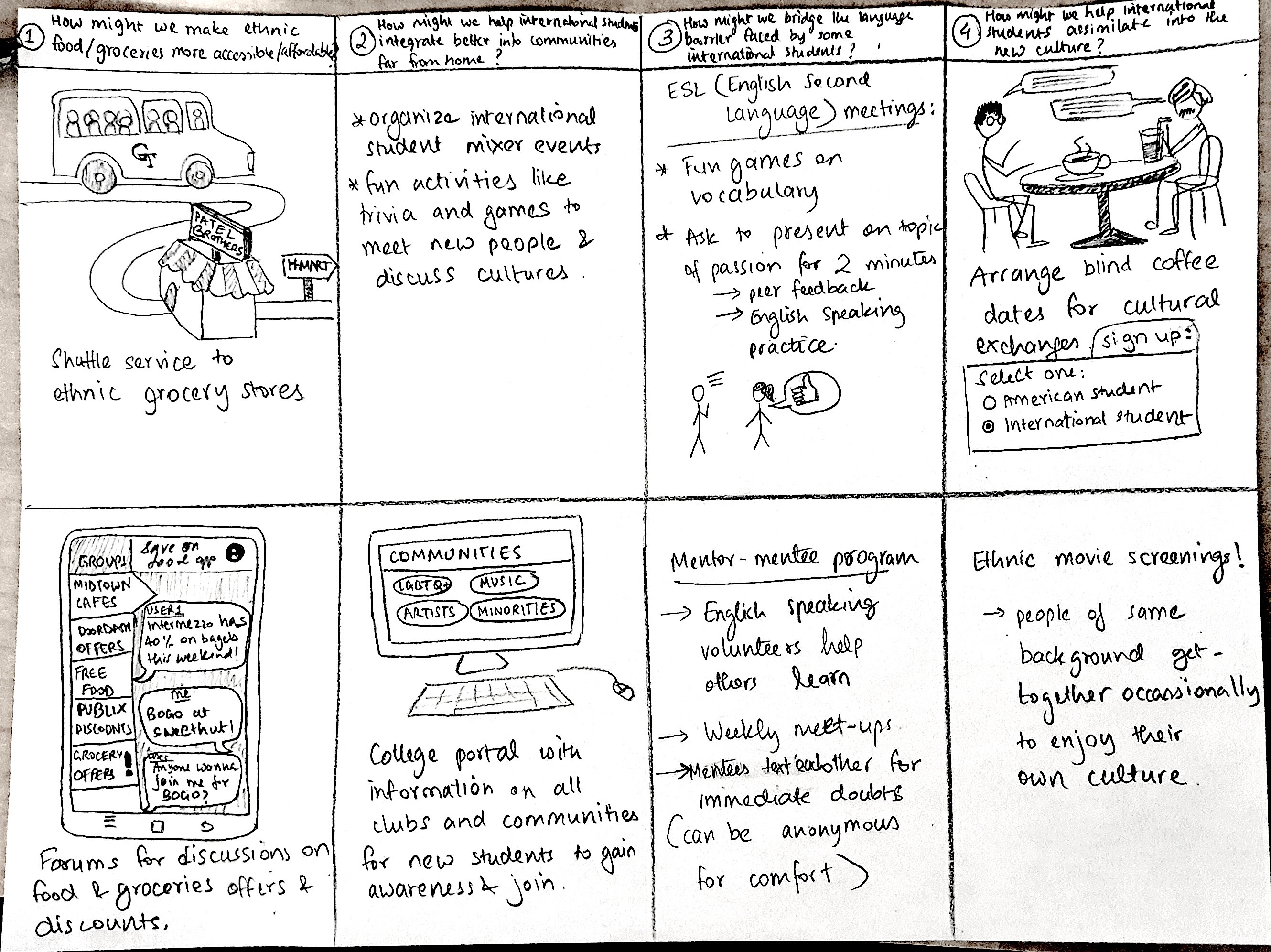
After collecting and analysing the survey and interview data, we had enough data to draw out an affinity map. We categorized the main pain points described by participants and found that a majority of the issues were food related.
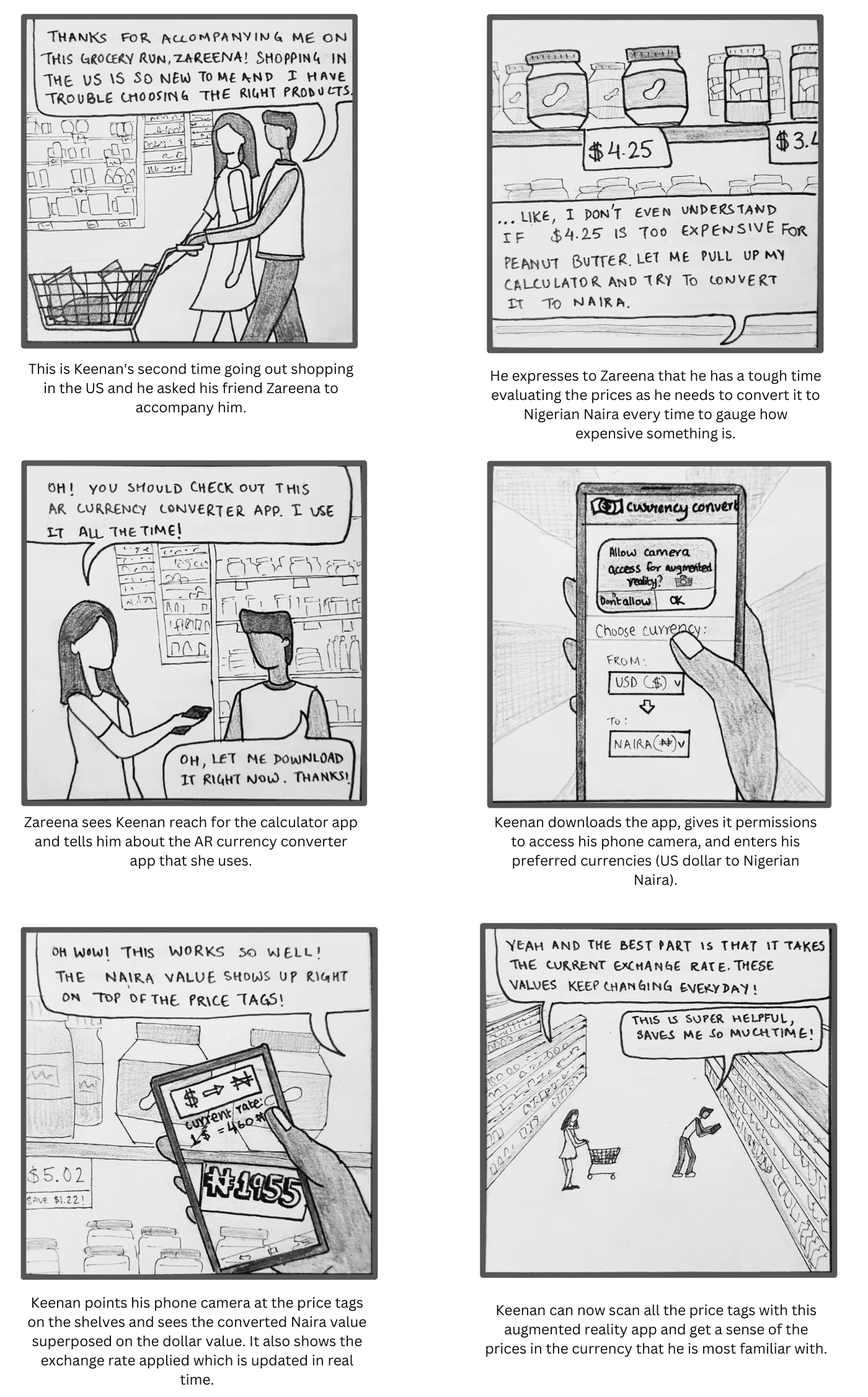
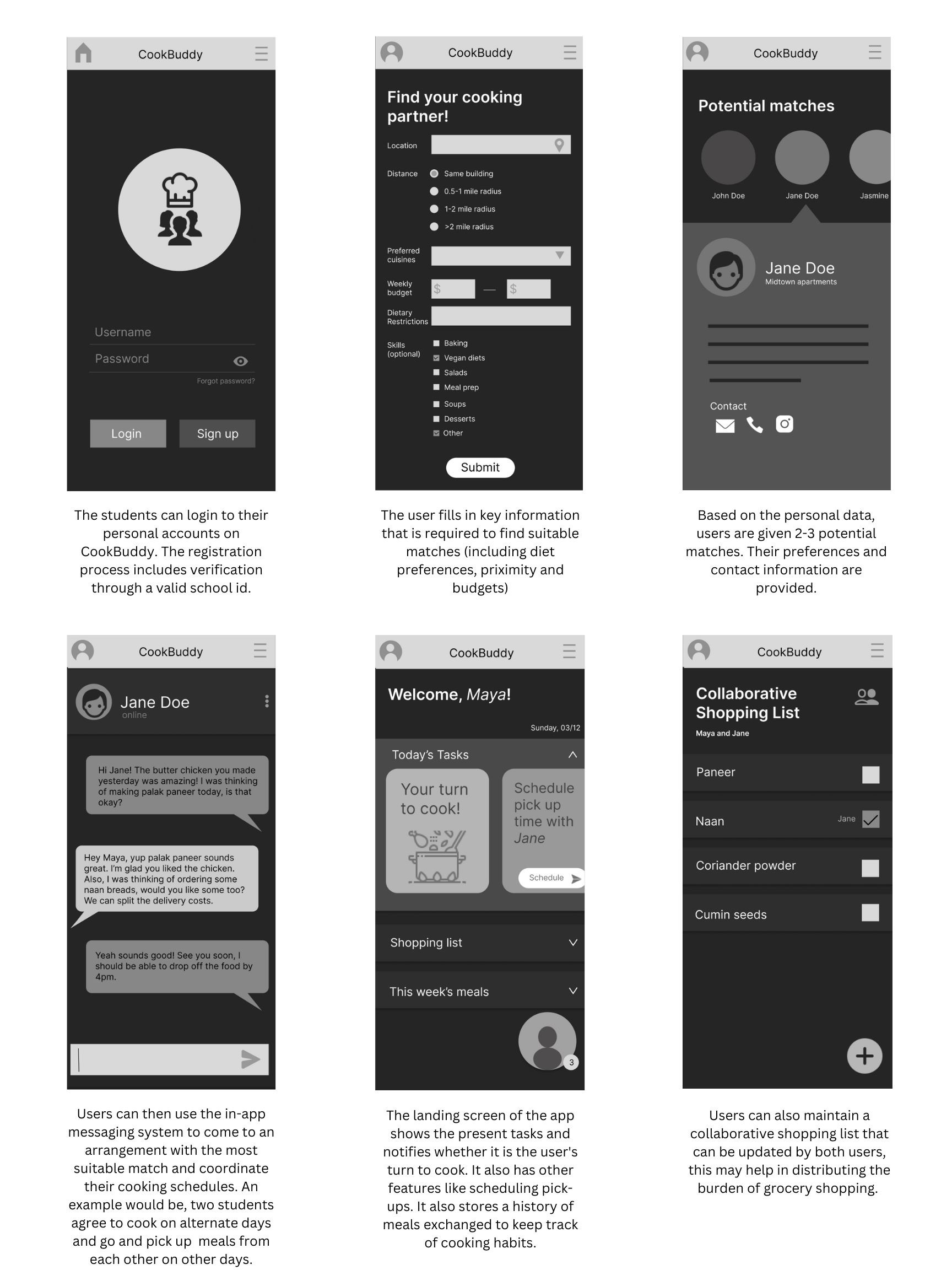
(This is more of a lo-fi prototype)
What if students had cooking partners? Using CookBuddy, an international student could find another student in their area with similar dietary preferences. This app would allow cook buddies to take turns cooking for each other so that the work would be shared.
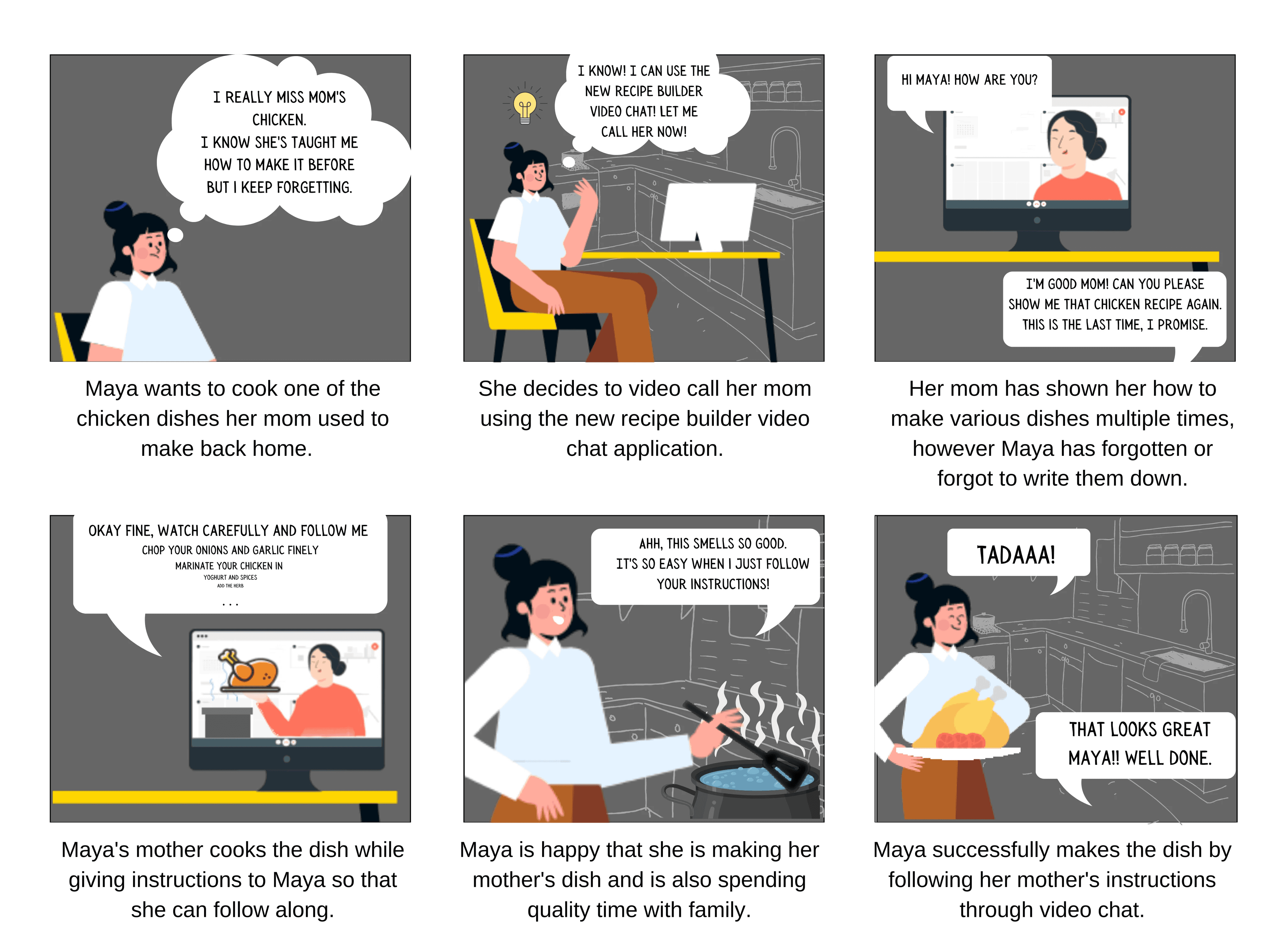
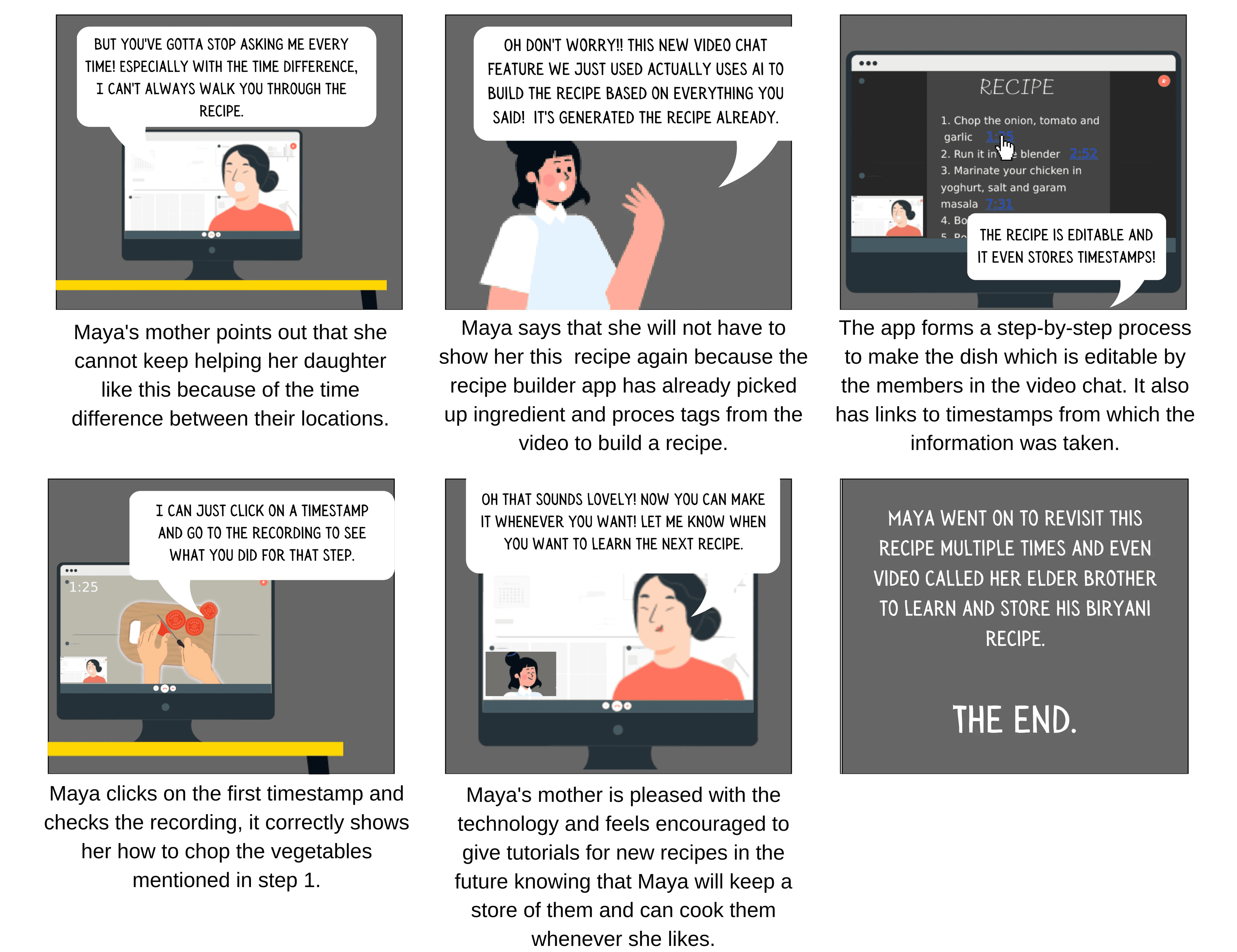
The idea behind this solution was to develop a virtual platform that allows people to share recipes with one another. At the end of this video call session, the application uses AI to generate a comprehensive recipe along with ingredients and step-by-step procedures for future use.
Narrowing it Down: Solving the Ethnic Foods Problem
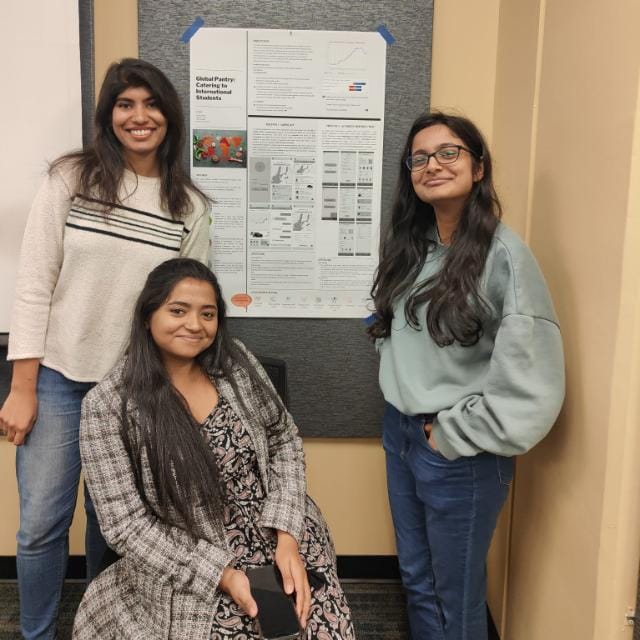
At this stage, we had a poster presentation with our main ideas in front of the entire CS6750 Human-Computer Interaction class. Based on our feedback from this session, we narrowed it down to two solutions that we wanted to prototype: finding ethnic groceries, and ride-sharing to grocery stores.
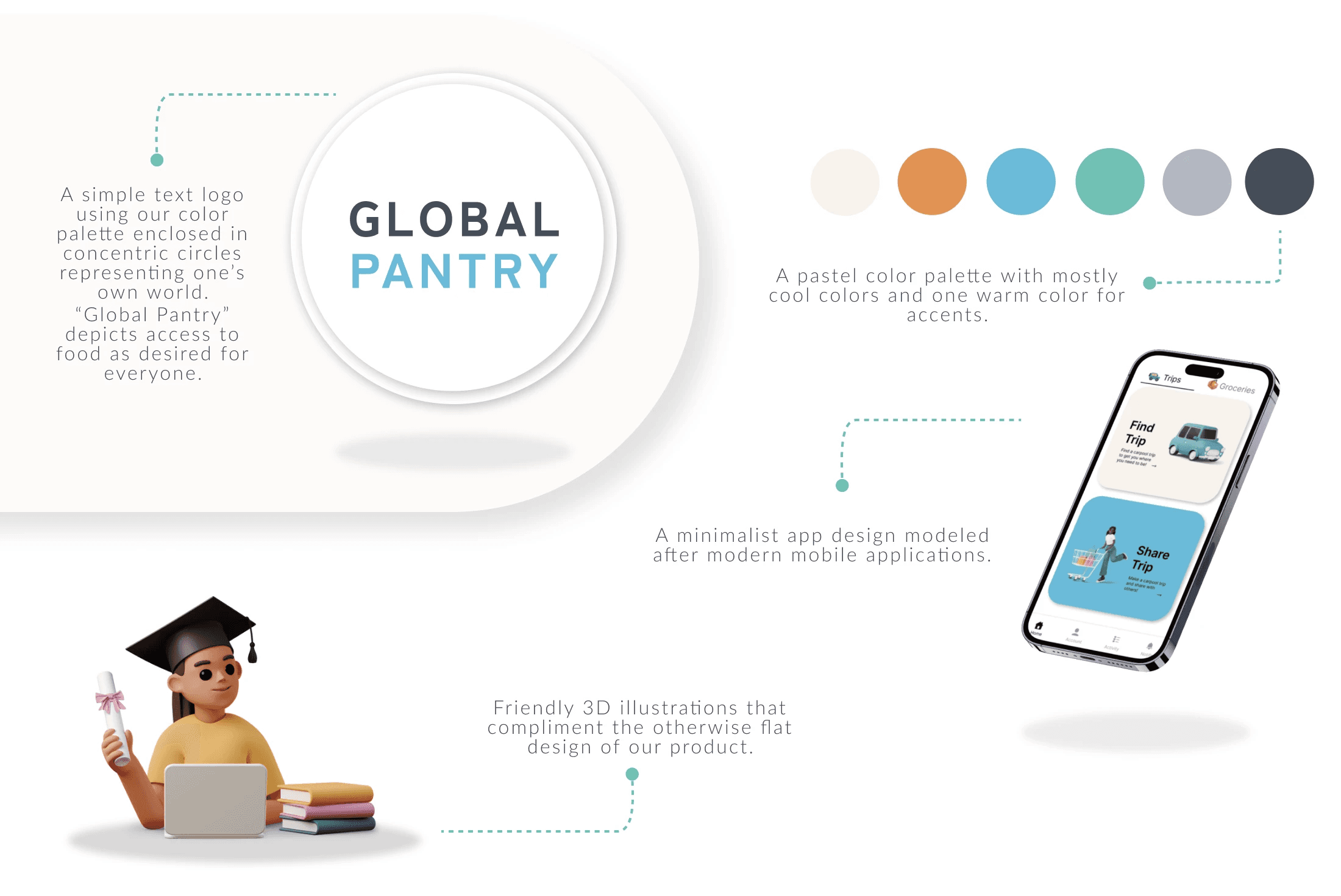
Design guide
PROTOTYPE

Custom profile
The profile page allows users to add friends, see their friends list, and view saved recipes. It also shows account information such as rides taken in the past and whether the user is a ride provider.


Activity and notifications
The Activity tab keeps track of recent and upcoming trips. The Notifications tab presents any recent updates to the account and the features of the app.


finding ethnic groceries
The Groceries tab allows users to go through a list of ingredients or food items they want and find stores nearby that sell them. It then leads you to car rides going that way.

Impact
The class understood the qualms faced by international students and the need to design specifically for the group.
97% of the students shown this app said they would download and use such an app immediately.
The ideas were proposed to labs in Georgia Tech that could potentially develop such an app.
Reflection
This was the first major UX project that I worked on from start to finish. From the user study and brainstorming sessions to the prototyping stages, this work has been very close to me- especially since I am an international student and identify with the cause on a personal level.
I became familiar with the design thinking process as taught by Dr. Jennifer Gahee Kim in HCI Principles.
If I were told to spend more time on this, I would try to consolidate the functionalities and distill the flow so as to not make an overwhelming app. The current layout does not do full justice to the vast offerings of this prototype.